
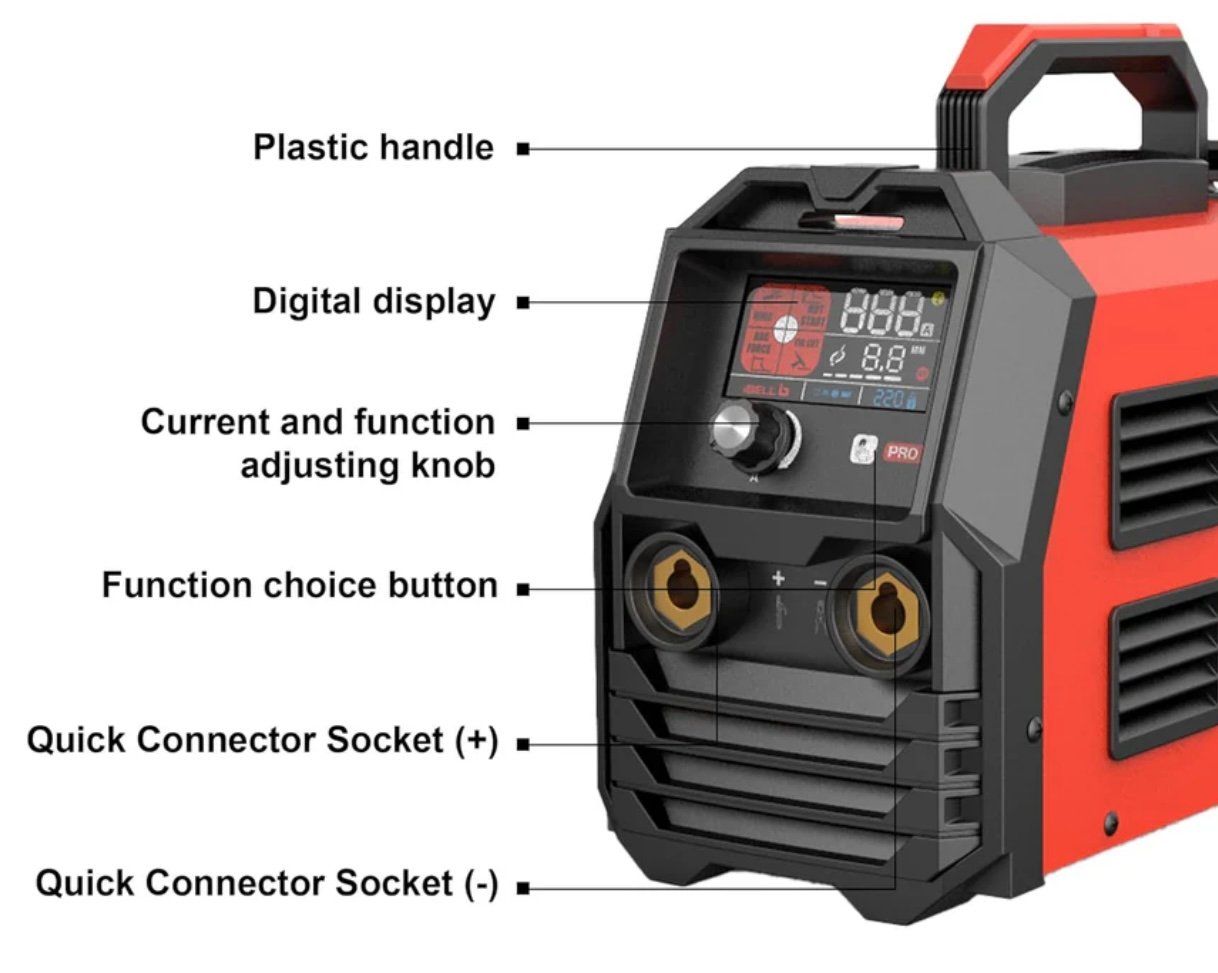
Digital MIG-220-81 MIG/MAG/MMA Welder,220Amp,220V, Gas Gasless MIG/MAG/MMA 3 in 1 Multiprocess Welder- 1 Year Warranty
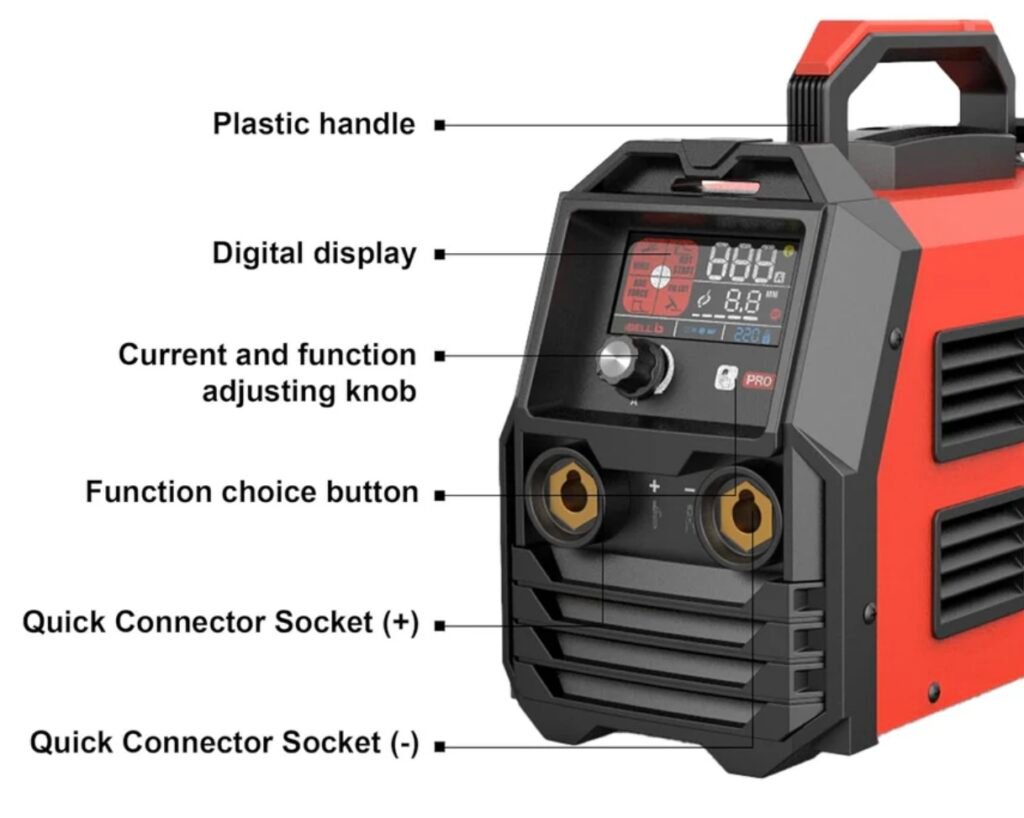
SSWELD Zone Digital MIG-220-81 MIG/MAG/MMA Welder,220Amp,220V, Gas Gasless MIG/MAG/MMA 3 in 1 Multiprocess Welder- 1 Year Warranty
Original priceRs27,000.00
Current priceRs22,151.00
- SPECIFICATIONS – IBL MIG220-81 can be plugged into 220V power supply. welder is MIG, MAG, and MMA – 3 in 1 modes.Rated Voltage : 160-250 V; Input Capacity: 7.2 KVA; MMA Welding: IGBT; MAG Welding: Gasless; MIG Welding: GAS. The application of IGBT technology has significantly enhanced the welding machine’s reliability and turned them into a lighter and compact version. integrated wire feeder provides a smooth wire feed.
- MULTIFUNCTIONING – You can work with CO2 gas, mixed gas or without gas. The welder machine uses 0.6mm/0.8mm/0.9mm flux core wire. For MIG welding 0.6mm/0.8mm/1.0mm wires. For MMA 1.6mm -5.0mm electrodes can be used.
- WORKS WELL AND EASY TO PICK UP WELDING – This MIG welding machine is an amazing portable welding unit. The adjustments are simple, quick responsive wire feeder, the welds are outstanding quality. Automatic settings are pretty accurate. The welding machine case is metal. Welder is sturdy.
- WIDE APPLICATIONS-This machine is super portable and light. In addition, the machine is with powerful functions and suitable for wide occasions. It can be used for hardware welding materials, home DIY, industrial installation, automobile maintenance, machinery manufacturing, engineering operations, steel structure welding.
- Metal active gas (MAG) welding: understanding the process
- MAG welding is a type of gas-shielded metal arc welding (GMAW) that utilizes a continuous, consumable electrode in the form of a wire, fed through a welding gun and into the weld pool. This process uses active shielding gases, typically a mix of argon and carbon dioxide (CO2), to protect the molten weld pool from the atmosphere, preventing contamination and oxidation.
- How does it work?
- Think of it this way: a wire electrode, which serves as the filler metal, is like a steady stream of material continuously fed through the welding gun into the weld pool. The shielding gas (argon and carbon dioxide being common choices) flows through the gun to create a protective barrier around the weld area, keeping out impurities like oxygen from the air. A constant voltage power source maintains a steady arc between the electrode and the base metal, generating the heat needed to melt the wire and fuse it with the workpiece. As the weld forms, the welder guides the gun along the joint, controlling the wire feed speed and gas flow with the trigger.
- MAG vs. MIG: a closer look
- While both MIG (Metal Inert Gas) and MAG welding are variations of GMAW, the main difference lies in the shielding gases used. MIG welding employs inert gases, like argon or helium, which don’t react with the weld pool. MAG welding, however, uses active gases such as CO2 or a combination of argon and CO2. These active gases participate in the welding process, influencing the arc characteristics and weld properties.
- Why choose MAG welding?
- MAG welding offers several advantages, making it a popular choice in various industries:
- Versatility: MAG welding can be used on a wide range of materials, including carbon steels, stainless steels, and some aluminum alloys.
- High deposition rate: This process can lay down a lot of weld metal quickly, increasing productivity.
- Good weld quality: With proper technique, MAG welding can produce high-quality welds with excellent penetration and fusion.
- Important considerations
- Shielding gas selection: Choosing the correct shielding gas mixture is crucial for optimizing weld quality and properties.
- Wire electrode type: The type of wire electrode needs to be compatible with the base material and the desired weld characteristics.
- Welding parameters: Proper adjustment of welding parameters like voltage, amperage, and wire feed speed is essential for achieving good welds.
- Welder skill: While MAG welding is considered relatively easy to learn, developing the necessary skills for consistent, high-quality welds still requires practice and experience.
- In essence, MAG welding is a powerful and versatile tool for joining various metals, offering a balance of speed, weld quality, and ease of use. Understanding its fundamentals and paying close attention to the details of the process can help you achieve excellent results in your welding projects.

Leave a Reply